An articulated lorry brought it down. Putting it back took rather more care.
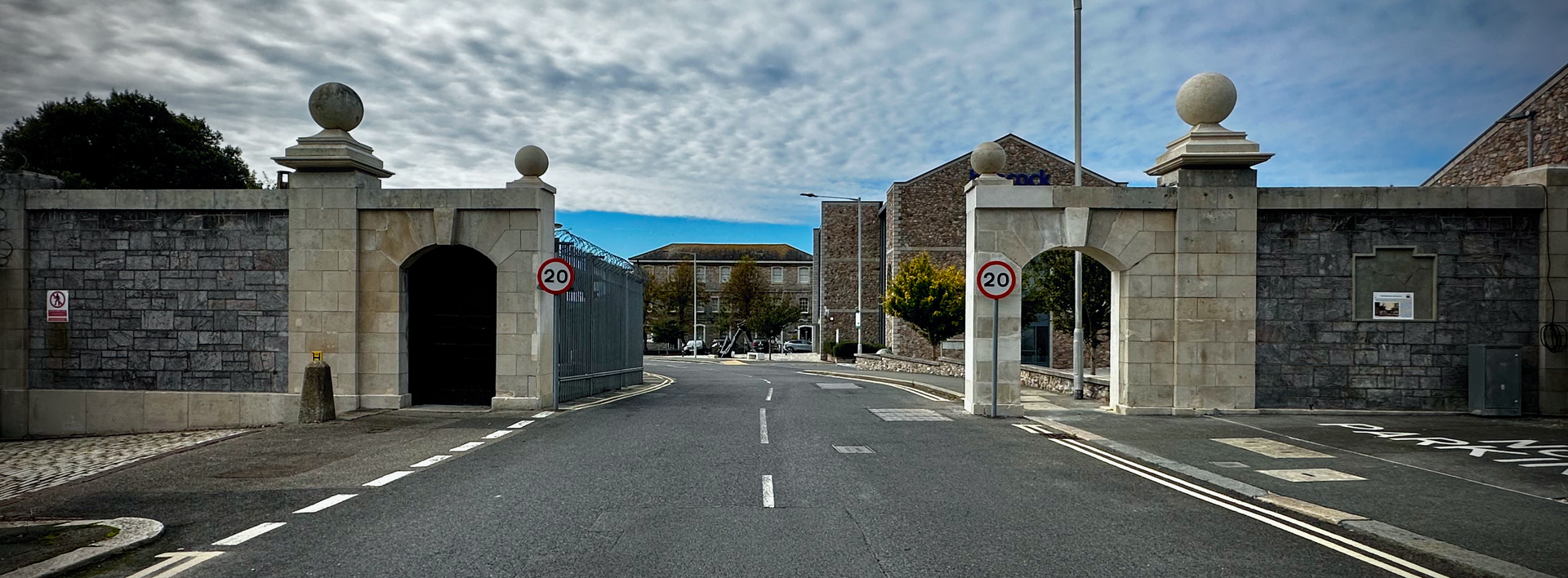
When part of Plymouth’s historic dockyard wall was accidentally demolished, the surviving stone was saved—but rebuilding it was far from a simple stacking exercise. Which pieces belonged where? What could be reused? And how could new Portland stone complete the picture without losing the character of the original?
At Oceansgate, BluePrint guided the reconstruction from the first assessment of the salvaged masonry through design, listed building consent, construction and heritage sign-off.
The result is more than a repaired wall. It is an entrance with presence, restoring a sense of arrival to a place where Plymouth’s maritime past meets its future.
A rather serious game of Giant Jenga
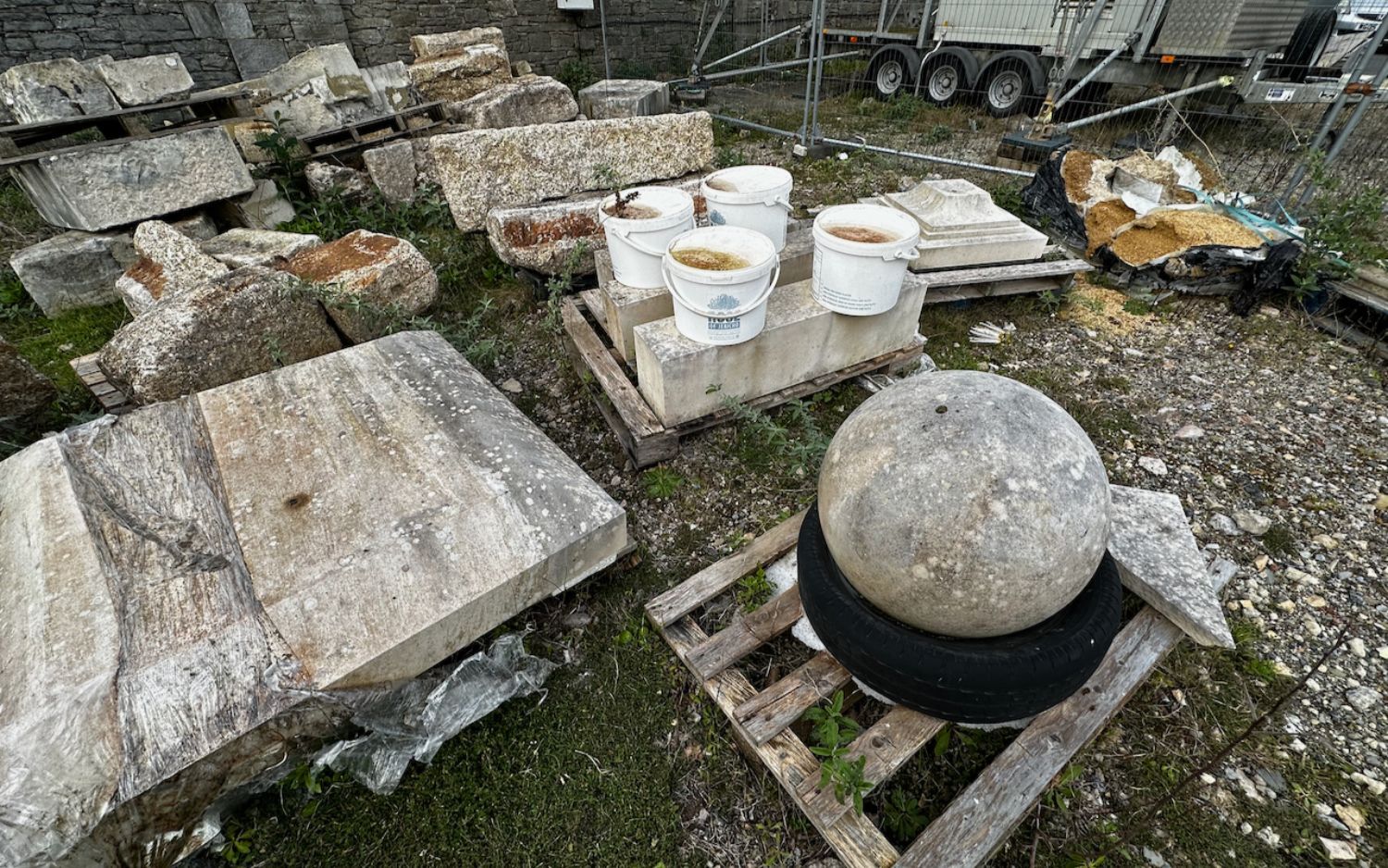
The damage occurred during construction of the adjacent development several years ago. The fallen material was stored, ready for eventual reconstruction. Before rebuilding could begin, however, we needed to establish exactly what had survived.
A historic entrance is more than a collection of interchangeable blocks. Each stone has dimensions, profiles and relationships to its neighbours. Understanding those relationships was essential to putting the arch, piers and capitals back together.
Fortunately, our director, Paul Channing, had some unlikely preparation.
Years earlier, he had made his own Giant Jenga set using lengths of 4 × 2-inch softwood, a saw and an angle grinder. We would not claim this constitutes recognised conservation training, but perhaps those hours spent working out how individual blocks form a stable whole weren't entirely wasted.
The dockyard wall required rather more documentation—and considerably less willingness to see everything fall over.

From salvaged stone to a restored entrance
Appointed by Plymouth City Council, we assessed the stored masonry, identified suitable material for reuse, and determined which components needed replacing with new Portland stone.
We prepared the reconstruction drawings, schedule of works, conservation specifications and methodologies, and secured listed building consent.
Our involvement continued throughout construction, working alongside AECOM as Contract Administrator, Morgan Sindall as main contractor and Riviera Stonemasons as the specialist subcontractor.
That continuity mattered. It kept the understanding developed during the assessment and design stages connected to the decisions being made on site.
The reconstruction was completed in October 2026, restoring the arch to the historic wall and bringing the project through to heritage review and sign-off.

An entrance with a future
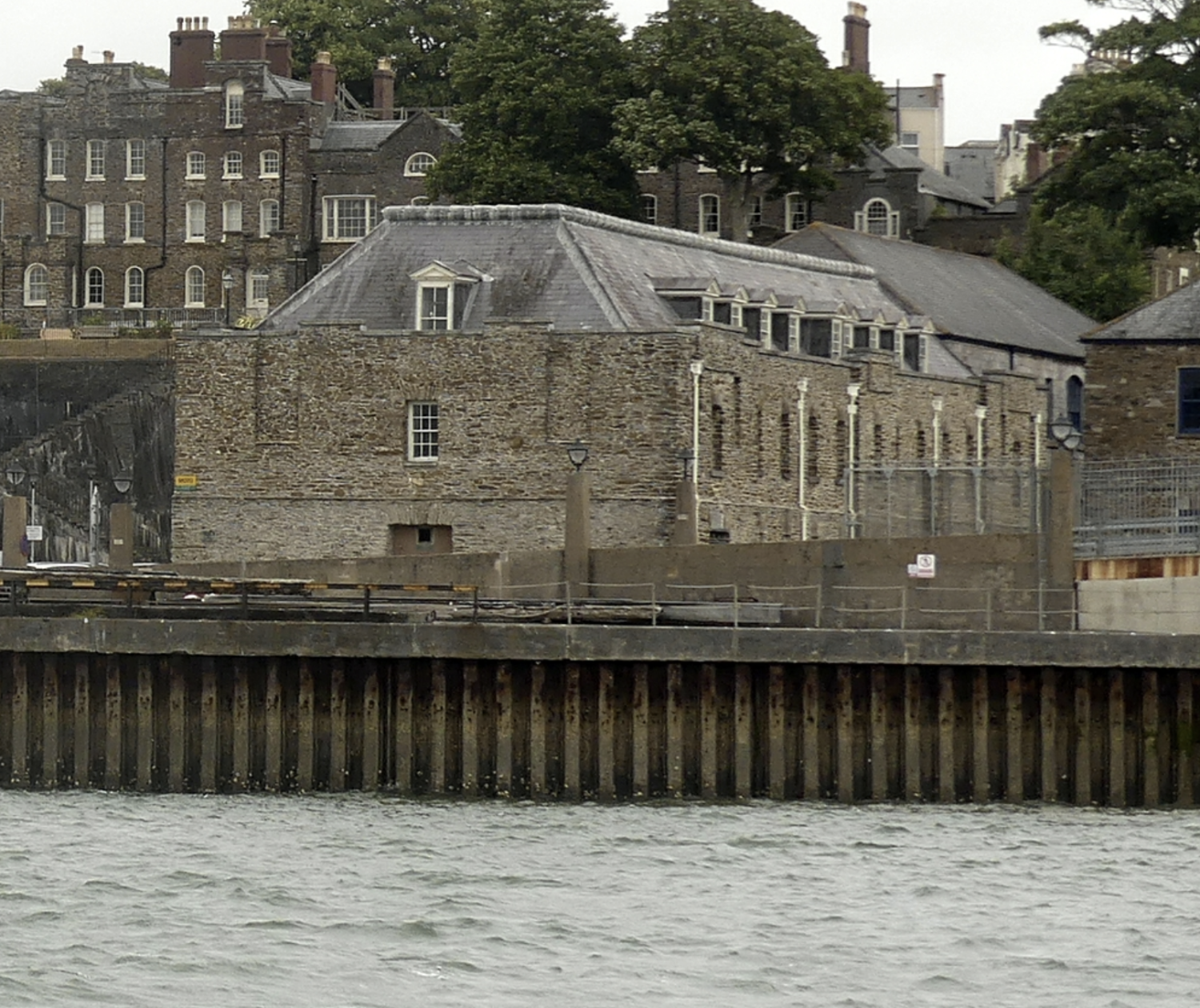
Oceansgate is a marine industries campus within Devonport’s historic South Yard, bringing previously underused defence land back into productive use for marine and maritime businesses.
Here, the connection between past and future is particularly fitting. Skilled work and marine enterprise are continuing in a place shaped by generations of maritime activity.
The entrance is a small but meaningful part of that story. Its scale, materials, and craftsmanship help establish Oceansgate as a place with an identity—not simply another commercial development.
Reusing suitable historic stone also reflects a practical conservation principle: understand the value of what survives before deciding what needs to be replaced.
We are delighted to have helped restore this entrance, alongside a skilled team and a client committed to doing the right thing. Our thanks go to Plymouth City Council, AECOM, Morgan Sindall and Riviera Stonemasons.
A wall can mark a boundary. An arch offers a way through.
At Oceansgate, the reconstructed entrance does both: holding a piece of Plymouth’s maritime history in place while framing the next chapter beyond it.
Explore our case study here for a closer look at the conservation approach, reconstruction process and completed works.